Browse Items (149 total)
Sort by:
Re-claiming the Pontine Marshes
Pope Sixtus V’s work on reshaping Rome extended beyond its city walls. Sixtus V drained the Pontine Marshes, malarial wetlands, located south of Rome along the Appian way and connecting to the Terracina [1]. The Pontine Marshes are low-lying plains…
Via Felice and Sixtus V's Roads of Rome
Sixteenth-century Rome had a surprisingly basic and outdated street system. Street traffic consisted primarily of horses, oxen, donkeys, carriages, and carts. Beggars and vendors crowded the streets as pedestrians, with smaller animals such as pigs…
Flaminian Obelisk
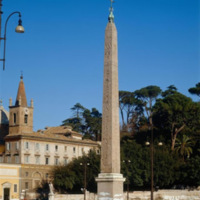
The Flaminian Obelisk was originally established by pharaoh Seti I at Heliopolis, around 1300 BC, standing almost 24 meters high and weighing 235 tons. His son Ramses II finished the monument by adding hieroglyphs. Augustus re-erected it in Campus…
Lateran Obelisk
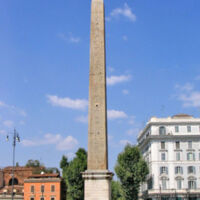
The Lateran obelisk is the tallest obelisk in the world, standing at 32 meters and weighing 522 tons [1]. It is made of red granite, potentially from the same quarry that was used for the obelisk in St. Peter's Square [2]. It was the only single…
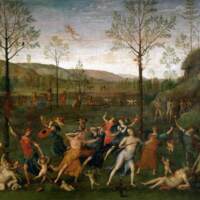
Divine Providence: Glorification of the Reign of Urban VIII
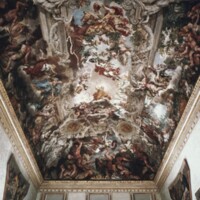
Divine Providence: Glorification of the Reign of Urban VIII is one of the reigning examples of the Baroque ceiling fresco, a manifestation of Pietro da Cortona’s mastery of Baroque style. The fresco dominates the ceiling of the Palazzo Barberini, the…
Fresco in the Sala di Apollo
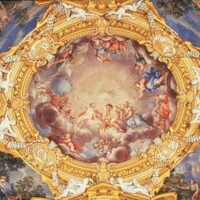
Ceiling fresco by Pietro da Cortona in the Sala di Apollo within the Palazzo Pitti
Trinity in Glory
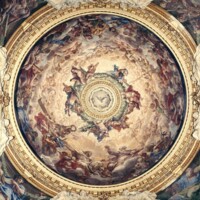
Ceiling fresco by Pietro da Cortona in Chiesa Nuova
Cupola of Santa Maria in Valicella
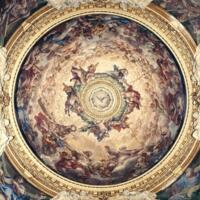
Commissioned in 1646, this work was a tremendous undertaking to fresco the cupola of the Chiesa Nuova for the Oratorians. Cortona also painted a second ceiling fresco in the same church. This fresco has historically been called "The Trinity in Glory"…
Fontana della Barcaccia

The Fontana della Barcaccia or the Fountain of the Old Boat was commissioned by Pope Urban VIII in 1627. He chose Pietro Bernini and his son, Gian Lorenzo Bernini, to create a fountain at this location. The duo created a fountain that pays homage to…