Browse Items (149 total)
Sort by:
Pantry Interior
The Artist
Giovan Battista Ruoppolo was born in Naples in 1629 [1]. Giovan Battista’s father, Francesco Ruoppolo, was a majolica painter, and scholars such as Ulisse Prota-Giurleo assume that Giovan Battista might have worked in his father’s majolica…
Palla della Peste
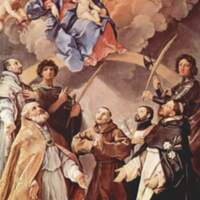
The Pala della Peste (Altarpiece of the Bubonic Plague) depicts the Madonna and Child in Glory with the Patron Saints of Bologna: Petronius, Francis, Ignatius, Francis Xavier, Proculus of Bologna, and Florian.
The Madonna and child are in the…
The Madonna and child are in the…
Orazio and Artemisia Gentileschi
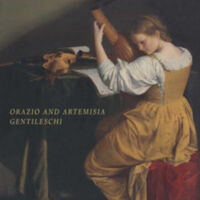
This book goes in depth describing many findings about the infamous father and daughter artistic powerhouses- Orazio and Artemisia Gentileschi. Orazio and Artemisia were both Italian Baroque painters. Keith Christiansen and Judith Mann explain the…
Oratorio dei Filippini, draft for the ground floor plan of the entire complex
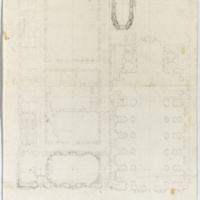
Ground floor building sketch for the Oratorio dei Filippini
Neptune and Triton
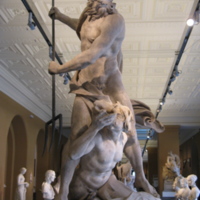
The breathtaking “Neptune and Triton” was completed by Bernini in 1622-3. It was commissioned by Alessandro Damascenti-Peretti Montalto. The sculpture was intended to be the focal point of his large fish pond at his villa.
The sculpture is a…
The sculpture is a…
Neapolitan Still Life Artists Chart
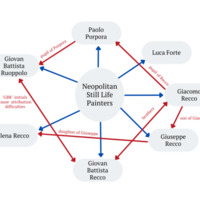
A chart displaying the network of notable still life painters in Naples during this time period. The artists included in the chart were responsible for the establishment of a uniquely Neapolitan still life style of painting. Furthermore, the artists…
Nativity
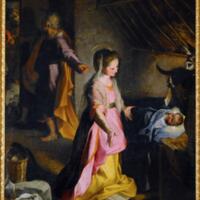
About two decades after Fontana’s “Holy Family with Saints Margaret and Francis”, Federico Barocci produced a “Nativity”. Both works dealt with the Holy Family as subjects which is the primary impetus for their comparison. On a deeper level, both…
Mme. Demorest Trade Card
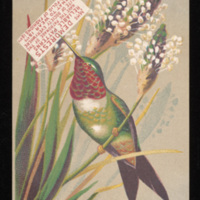
Trade Card advertising Mme. Demorest’s Reliable Patterns,
[New York, New York]: [ca. 1870-1900]
[New York, New York]: [ca. 1870-1900]
Medusa
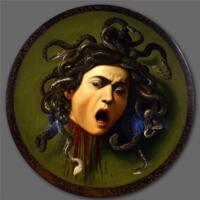
Caravaggio' s depiction of Medusa. This work was painted on a sixteenth-century tournament and was commissioned by Cardinal del Monte. Caravaggio chose to depict Medusa in a terrifying manner with a horrified expression. Caravaggio depicts her at the…
Medusa
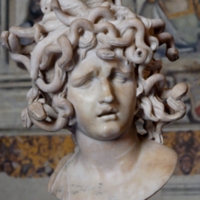
Bernini’s Medusa sculpture shows Medusa amidst her transformation into a monster. Bernini’s depiction here is again heavily depicted by Ovid’s Metamorphosis. According to Ovid, Medusa was punished by Athena for having an affair with Poseidon in her…