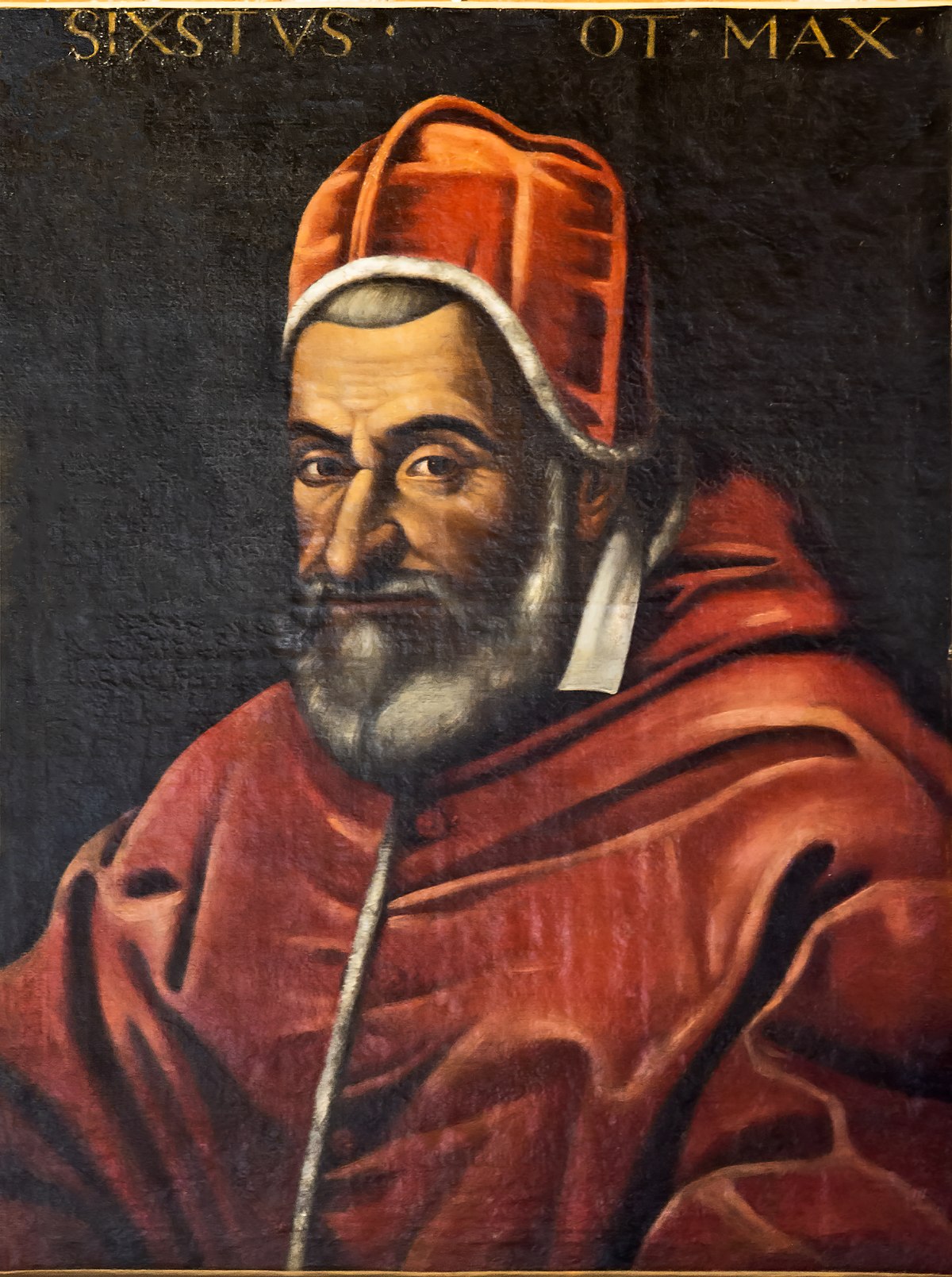
This collection explores the extent to which Pope Sixtus V (born Felice Peretti Montalto) transformed Rome into a Baroque city. In the middle of the sixteenth century, Rome was still very much an ancient city with poor infrastructure. As the sixteenth century came to a close, Rome has undergone immense transformation, with the rebuilding and construction of churches, palaces, roads, aqueducts, and more. Although he was not the only pope involved in this transformation, Pope Sixtus V stands out as a key figure. Sixtus V was nothing short of a visionary, whose body of work highlights his innovative urban planning as head of the Catholic Church (1585-1590).
In order to truly evaluate Sixtus V's impact, this exhibit pays note to context. Late sixteenth-century Rome's most powerful figure was its governing pope [1]. Since each pope came from his own family and had unique interests and backgrounds, the changes made during a particular papacy heavily reflect the desires of that particular pope. Thus, this exhibit examines Sixtus V's predecessors and successors. Popes before him such as Sixtus IV, Julius III, Paul IV, Pius IV, Pius V, and Gregory XIII did not concentrate their efforts on urban design to the extent that Sixtus V did [1]. Although they were focused on important issues such as wars, reformation, enforcing decrees from the Council of Trent, and the education of the clergy, their impact on Rome is not highlighted as much through urban structures and design [1]. Popes after him such as Urban VII (1623-1644) seem to be inspired by Sixtus V, putting more emphasis on art patronage.
Sixtus V still impacts Rome today through the lasting impact of his urban planning. This exhibition showcases Sixtus V's design of the city and analyzes his different mediums for reshaping Rome. This exhibit explores Sixtus V's remodeling of the streets, his building of the fountain Fontana Felice, the Lateran Palace, the Dome of Saint Peter's, the Vatican Library, his financing of the Pontine Marshes, and his moving of obelisks into key piazzas and streets.
References:
[1] Long, Pamela O. Engineering the Eternal City: Infrastructure, Topography, and the Culture of Knowledge in Late Sixteenth-Century Rome. Chicago: University of Chicago Press, 2018.
Credits
Cameron DeChurch