St. Peter's Obelisk
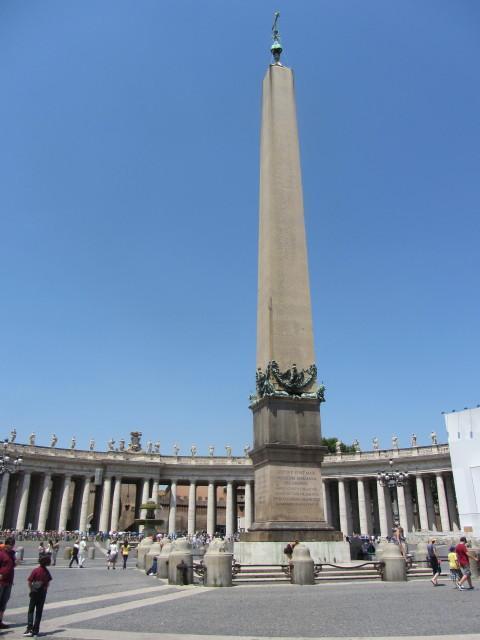
The obelisk was located in Alexandria, Egypt, until 41 C.E. when Emperor Caligula ordered it be transported across the Mediterranean to Rome. It was erected in the Vatican region and remained south of the basilica in front of two ancient cylindrical mausoleums for centuries. The obelisk is a sundial and has four lions resting at the base. Popular legend was that the golden orb at the top contained the ashes of Julius Caesar. However, with the basilica of St Peter’s now built next to it, the obelisk was in a dark corner. Many wanted to relocate the obelisk away from such an obscure location, but moving such a large structure presented many difficulties [1].
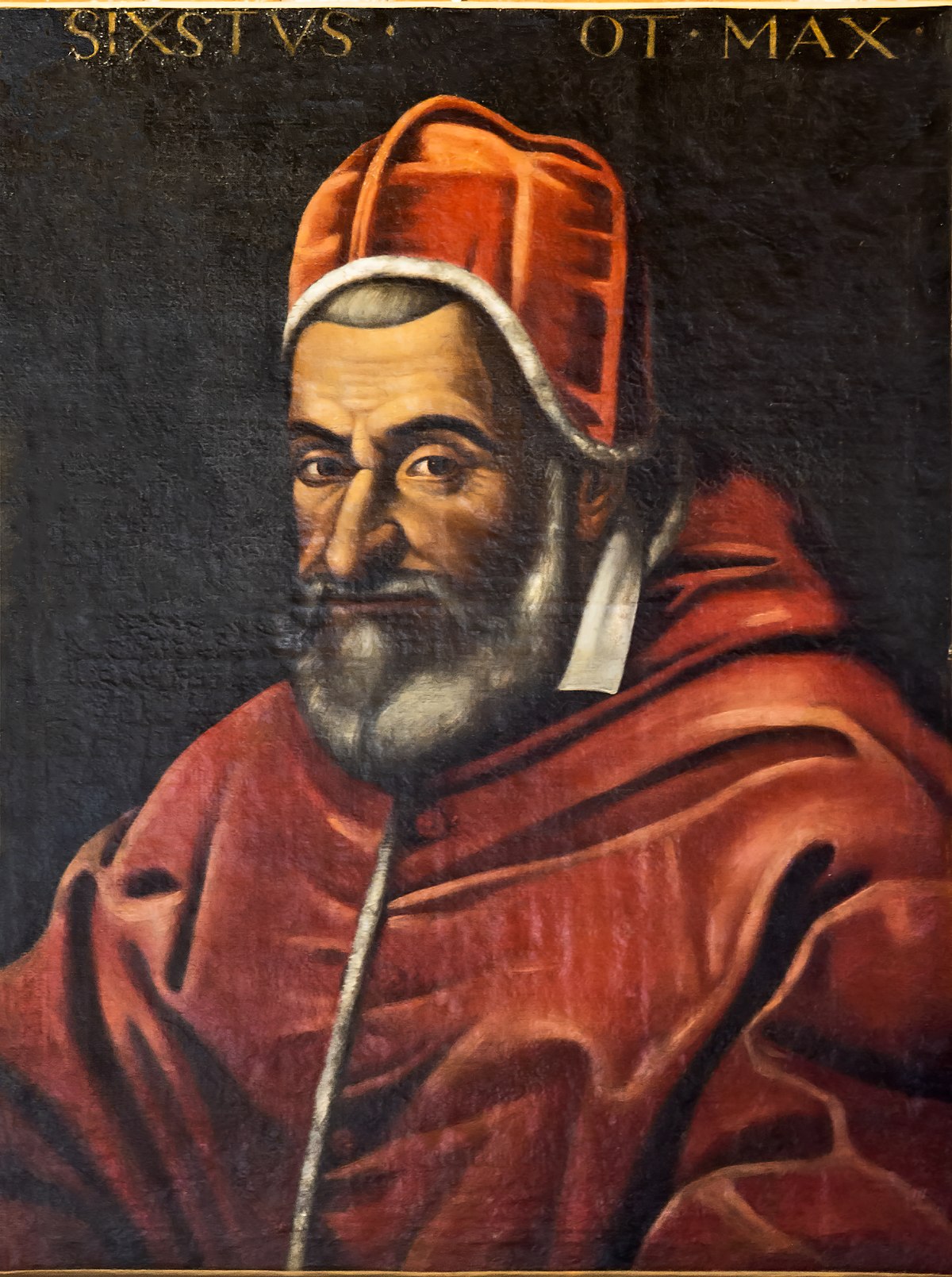
In 1586, Pope Sixtus V ordered the transportation of the obelisk to St. Peter's Square, where it would be more visible and mark the victory of the Church over Paganism in a more central location. Pope Sixtus V held a competitive and thorough selection process to determine how the obelisk would be moved, and who would engineer this process. Pope Sixtus V commissioned numerous meetings with up to 500 men from across Italy, each with unique proposals to move the obelisk vertically, horizontally, at a 45 degree angle, etc. Domenico Fontana ultimately impressed Sixtus the most, using models to show how an intricate system of a wooden tower, ropes, and pulleys [2]. Domenico Fontana was selected as the engineer to lead a complex transportation process of "modern technology", involving ropes, pulleys and rollers. Pope Sixtus V surmounted the obelisk with a cross and established a new base for it that read "Behold the Cross of the Lord! Flee adversaries, the Lion of Judah has conquered".
The moving of this obelisk was particularly significant because it used ancient materials in a new light, known as interpretatio christiana [3]. It was also an integral part of Pope Sixtus V's urban planning scheme of using obelisks as focal points of a dense and lively network of radiating streets throughout the city [4]. The lasting impact of this obelisk, which transformed St. Peter's Square, exemplifies the Catholic Church's role in sponsoring and positioning the Baroque Art movement in Italy.
References:
[1] Long, Pamela O. Engineering the Eternal City: Infrastructure, Topography, and the Culture of Knowledge in Late Sixteenth-Century Rome. Chicago: University of Chicago Press, 2018.
[2] Dibner, Bern. “Moving the Obelisk.” Scientific American 184, no. 6 (1951): 58–59. https://doi.org/10.1038/scientificamerican0651-58.
[3] McClendon, Charles B. “The History of the Site of St. Peter's Basilica, Rome.” Perspecta 25 (1989): 32. https://doi.org/10.2307/1567138.
[4] Burroughs, Charles. “Opacity and Transparence: Networks and Enclaves in the Rome of Sixtus V.” Res: Anthropology and aesthetics 41 (2002): 56–71. https://doi.org/10.1086/resv41n1ms20167556.