Browse Items (11 total)
- Collection: Pope Sixtus V
Sort by:
Via Felice and Sixtus V's Roads of Rome
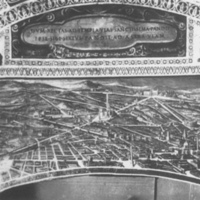
Sixteenth-century Rome had a surprisingly basic and outdated street system. Street traffic consisted primarily of horses, oxen, donkeys, carriages, and carts. Beggars and vendors crowded the streets as pedestrians, with smaller animals such as pigs…
Addition to Apostolic Palace

While exploring the Apostolic, or Vatican Palace, it is important to note that it was not actually inhabited by the popes until Pope Innocent III built a papal residence near St. Peter’s in the late twelfth century [1]. The Popes re-established their…
Addition to Vatican Library
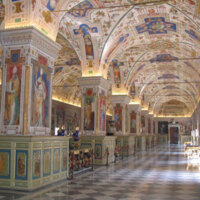
A critical component to Sixtus V’s legacy is his construction of a new Vatican Library [1]. The Vatican libraries date to the 15th century, and grew in significance as the Popes moved from the Lateran Palace to the Vatican. In 1588, Pope Sixtus V…
Re-claiming the Pontine Marshes
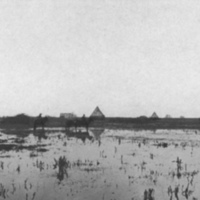
Pope Sixtus V’s work on reshaping Rome extended beyond its city walls. Sixtus V drained the Pontine Marshes, malarial wetlands, located south of Rome along the Appian way and connecting to the Terracina [1]. The Pontine Marshes are low-lying plains…
Dome of St Peter's Basilica
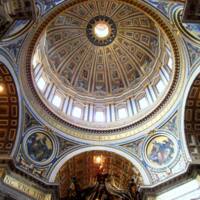
After Rome was sacked in 846, the old St Peter’s was continuously refurbished and repaired. Pope Nicholas V (1447-1455) began the first new construction. Nicholas V worked with architect Alberti, who wanted to remake the city with St. Peter’s as its…
Flaminian Obelisk
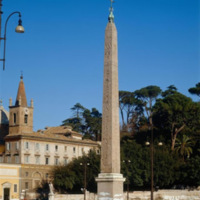
The Flaminian Obelisk was originally established by pharaoh Seti I at Heliopolis, around 1300 BC, standing almost 24 meters high and weighing 235 tons. His son Ramses II finished the monument by adding hieroglyphs. Augustus re-erected it in Campus…
Lateran Obelisk
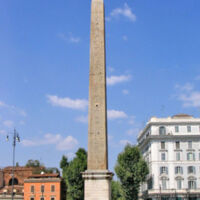
The Lateran obelisk is the tallest obelisk in the world, standing at 32 meters and weighing 522 tons [1]. It is made of red granite, potentially from the same quarry that was used for the obelisk in St. Peter's Square [2]. It was the only single…
Pope Sixtus V's Rebuilding of the Lateran Palace
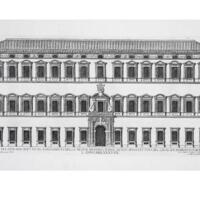
When Pope Sixtus V was elected to the papacy in 1585, he immediately set out to rebuild the Lateran Palace [1]. Pope Sixtus V consulted with his personal architect, Domenico Fontana, who deemed the Patriarchium Lateranense to be "old buildings” with…
St. Peter's Square Obelisk
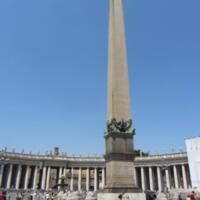
The obelisk was located in Alexandria, Egypt, until 41 C.E. when Emperor Caligula ordered it be transported across the Mediterranean to Rome. It was erected in the Vatican region and remained south of the basilica in front of two ancient cylindrical…