Browse Items (149 total)
Sort by:
Esther and Ahasuerus
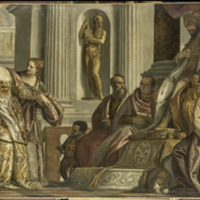
Considered one of the most notable late Renaissance masters, Veronese’s Esther and Ahasuerus illustrates both the Old Testament story and his mastery of large-scale compositions set amidst the grandiose backdrop of Venetian architecture [1].…
Still Life with Birds and Fruit
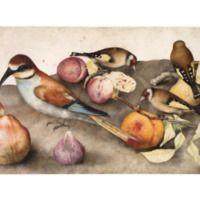
Giovanna Garzoni painted this magnificent still-life in 1650, towards the middle/beginning of the latter-half of her career. This painting was originally thought to be created by Jacobo Ligozzi, but is now accurately credited to Garzoni [1]. Art…
Portrait of a Nun

Sofonisba Anguissola, the artist of the portrait, was born into a financially struggling noble family with six siblings. She was known to utilize her family members as subjects of her early paintings (Murphy 2007). Indeed, the pictured individual is…
A Crystal Fruit Stand with Peaches, Quinces, and Jasmine
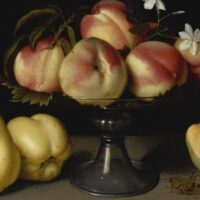
This oil on canvas still life painting is the earliest still life with a clear, concrete creation date, and is Galizia's first signed one [1]. Different sources refer to this painting by slightly different names from the most common name used in the…
Annotated Bibliography Entry: "The Not-So-Still Lifes of Giovanna Garzoni" by Mary D. Garrard

Garrard D., Mary. “The Not-So-Still Lifes of Giovanna Garzoni.” Essay. In "The Immensity of the Universe" in the Art of Giovanna Garzoni, 62-77. Sillabe, 2020.
Mary D. Garrard's essay within Sheila Barker's catalogue discusses the work of…
Mary D. Garrard's essay within Sheila Barker's catalogue discusses the work of…
The Immaculate Conception
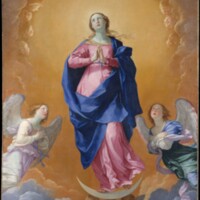
In the eyes of G. B. Passeri, a contemporary biographer, Guido Reni was "the noblest, most majestic painter who ever lived- not only in my own opinion, but by common consent.” Reni, the most celebrated Italian painter of the seventeenth century, was…
Orazio and Artemisia Gentileschi
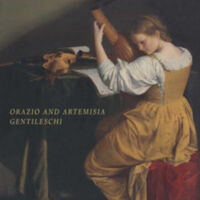
This book goes in depth describing many findings about the infamous father and daughter artistic powerhouses- Orazio and Artemisia Gentileschi. Orazio and Artemisia were both Italian Baroque painters. Keith Christiansen and Judith Mann explain the…
The Angel Appearing to Saint Jerome
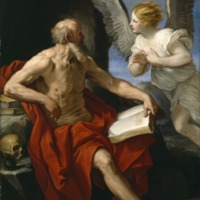
This painting is a late work of Reni, demonstrating qualities of rapidity and self-assurance. At that time Reni had abandoned the smooth finish that had been characteristic of his earlier work in favor of a slightly looser and more animated surface.…
Apollo and Daphne
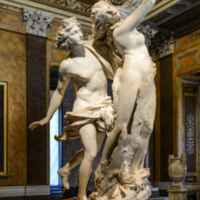
Bernini’s life-sized marble sculpture of “Apollo and Daphne” is regarded as one of his most powerful and emotional works. The work was commissioned in 1622 by Cardinal Scipione Borghese and was initially placed in his villa.
The work illustrates…
The work illustrates…
The Rape of Proserpina
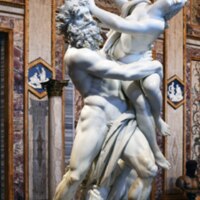
Bernini’s “The Rape of Prosperina” marble sculpture portrays the abduction of Proserpina, also known as Persephone, who is seized by the god of the underworld Pluto. The work was commissioned by Cardinal Scipione Borghese for his four large-scale…