Browse Items (149 total)
Sort by:
The Separation of Night from Day
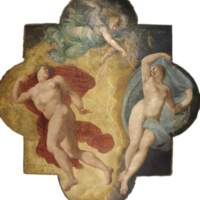
The Separation of Night from Day happens in the story of the Creation. A winged celestial being or spirit, who has variously been called Dawn or Twilight, separates two figures with two wands. Day, a scantily clad young man, moves swiftly towards the…
Pantry Interior
The Artist
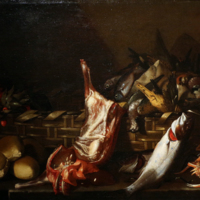
Giovan Battista Ruoppolo was born in Naples in 1629 [1]. Giovan Battista’s father, Francesco Ruoppolo, was a majolica painter, and scholars such as Ulisse Prota-Giurleo assume that Giovan Battista might have worked in his father’s majolica…
Via Felice and Sixtus V's Roads of Rome
Sixteenth-century Rome had a surprisingly basic and outdated street system. Street traffic consisted primarily of horses, oxen, donkeys, carriages, and carts. Beggars and vendors crowded the streets as pedestrians, with smaller animals such as pigs…
Aurora
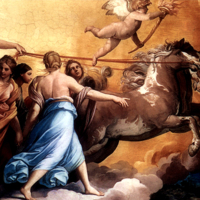
The Aurora is a large Baroque ceiling fresco painted in 1614 by Guido Reni for the Casino, or garden house, adjacent to the Palazzo Pallavicini-Rospigliosi, in Rome. The casino and the fresco were commissioned by the Cardinal Scipione Borghese.…
Addition to Apostolic Palace

While exploring the Apostolic, or Vatican Palace, it is important to note that it was not actually inhabited by the popes until Pope Innocent III built a papal residence near St. Peter’s in the late twelfth century [1]. The Popes re-established their…
Fish, Spiny Lobster, Squid, and Spider Crab on a Stone Ledge
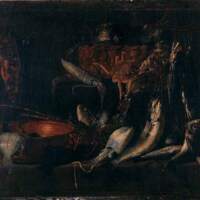
The Artist
Giovan Battista Recco was born around 1615 in Naples, and he is assumed to be the brother of Giacomo Recco and thus also born into an intergenerational family workshop. Little is known about Giovan Battista Recco, as there are few works…
Penitent Magdalene
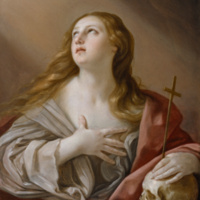
According to Christian tradition, after meeting Christ, Mary Magdalene regretted her former sinful ways. The claims that Mary Magdalene was a prostitute leading a promiscuous way of life before meeting Jesus and repenting of her sinful ways, are…
Addition to Vatican Library
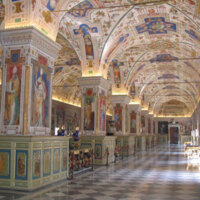
A critical component to Sixtus V’s legacy is his construction of a new Vatican Library [1]. The Vatican libraries date to the 15th century, and grew in significance as the Popes moved from the Lateran Palace to the Vatican. In 1588, Pope Sixtus V…
Saint Sebastian
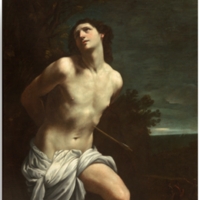
Guido Reni uses one of his most iconic compositions in this work. Sebastian was a Roman soldier who suffered martyrdom for his Christian faith under the reign of Diocletian and Maximian at the end of the third century. He became a patron saint of the…
Re-claiming the Pontine Marshes
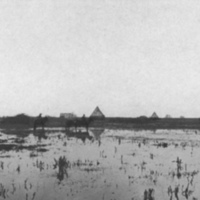
Pope Sixtus V’s work on reshaping Rome extended beyond its city walls. Sixtus V drained the Pontine Marshes, malarial wetlands, located south of Rome along the Appian way and connecting to the Terracina [1]. The Pontine Marshes are low-lying plains…