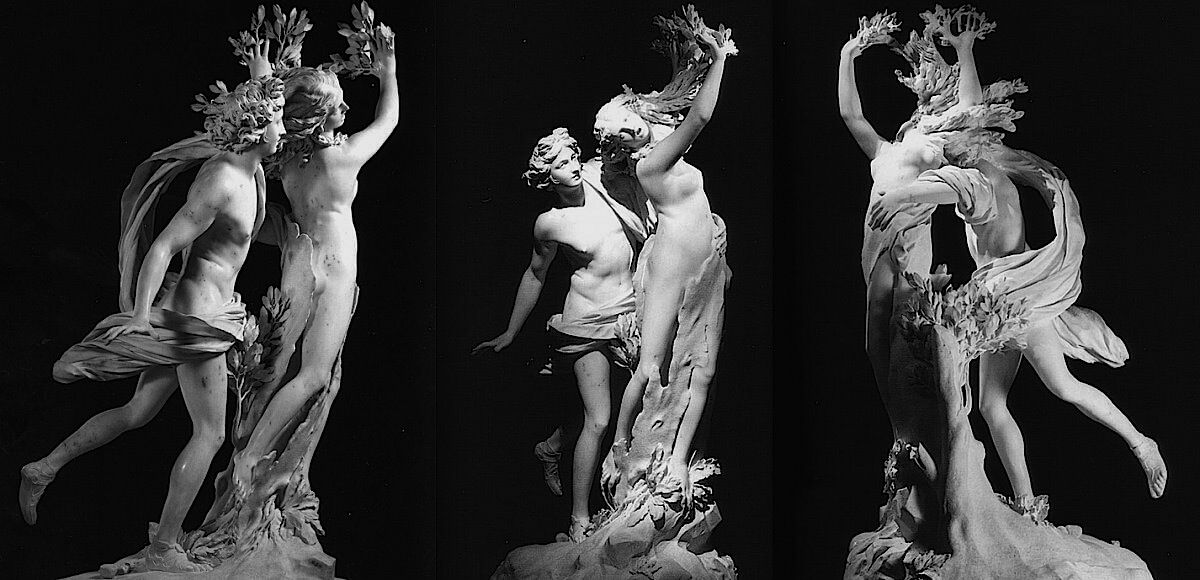
Bernini's Early Mythological works
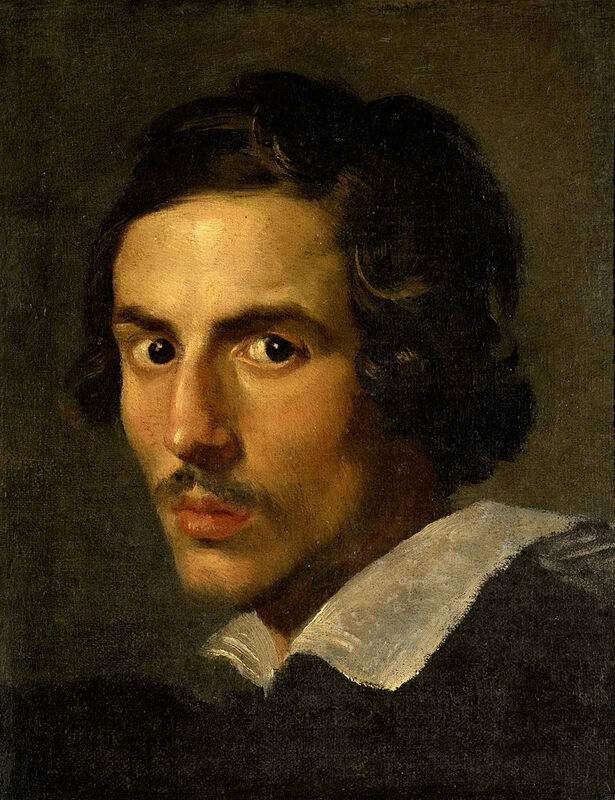
Gian Lorenzo Bernini's Background
Bernini was born in 1598 in Naples, Italy. He was the son of the Florentine painter Pietro Bernini who helped spearhead his career as an artist [3]. His family moved to Rome in 1605 and Gian Lorenzo Bernini remained there till his death.
Bernini was a recognized child prodigy [4]. Remarkably, he began sculpting at the age of eight. His father trained him as a sculptor at his studio and encouraged him to take part in his art workshop. Gian Lorenzo Bernini later in his adolescence helped his father with his commissions and eventually attained commissions of his own during these years.
Bernini's Legacy
Gian Lorenzo Bernini is one of the most outstanding sculptors of the 17th century. He influenced the development of the Italian Baroque style and is considered by many as the “father” of the Baroque style [1]. He is famous for his combinations of distinct art mediums from sculpture, architecture to painting which allow him to create fused masterpieces[ 2]. He has a pivotal role in the artworks from the Counter-Reformation period. His deeply religious and spiritual masterpieces ranging from The Ecstacy of St Theresa to the Blessed Ludovica Albertoni are exemplary examples of the emotional religious works that the Catholic Church strived for at this moment in history.
Early Mythological Works
In this part of the exhibition, you will explore two of Bernini’s earliest mythological works. The first is A Faun Teased by Children which he made as an adolescent. He created the piece alongside his father. Thus, this piece contains artistic elements from both Berninis. The creation of this work helped Bernini develop the individual artistic style that he would carry over various of the other mythological sculptures we will explore during this exhibition.
The second piece is Bernini's Sleeping Hermaphroditus. The work is a restoration piece. Bernini, during the early part of his career, partook in a series of restoration projects like these. The Sleeping Hermaphroditus is, arguably, the most famous work among his restoration projects which also influenced his future works and depictions of Greek and Roman myths.
References
- Wittkower, Rudolf. Gian Lorenzo Bernini: The Sculptor of the Roman Baroque. London: The Phaidon Press, (1966), 13.
- Wittkower, Gian Lorenzo Bernini: The Sculptor of the Roman Baroque, 13.
- Preimesberger, Rudolf, and Michael Mezzatesta. "Bernini, Gianlorenzo." Grove Art Online. 2003; Accessed 7 Dec. 2021.
- Preimesberger, "Bernini, Gianlorenzo."