The Influence of Ovid's Metamorphoses
Background
Ovid’s Metamorphoses is an 8 AD Latin poem that consists of over 250 myths that are connected together through a continuous narrative [1]. Its influence in the history of art cannot be overstated. After the Holy Bible, Ovid’s Metamorphoses is the most widely illustrated book to inspire modern artists [2]. Our modern conceptions of classic Greek mythology stories are also mostly drawn upon Ovid’s interpretations of these stories. Ovid’s Metamorphoses has a pivotal place in popular culture.
His various poems all touch on the themes of the cycle of nature, rebirth, and transformation. Ovid cleverly delves into the human psyche and the sinful nature of humans through this masterful piece of literature. His works lead to the theoretical basis of the “Ovidian theory of art”: the notion that art marking is a form of transformation and that all art is symbolically and conceptually an act of metamorphosis [3].
Influences
Many of the most notable works of art in history have drawn upon the narratives of Ovid. These works include Titian’s Diana and Actaeon, Peter Paul Rubens’ The Fall of Phaethon, and Salvador Dali’s Metamorphosis of Narcissus.
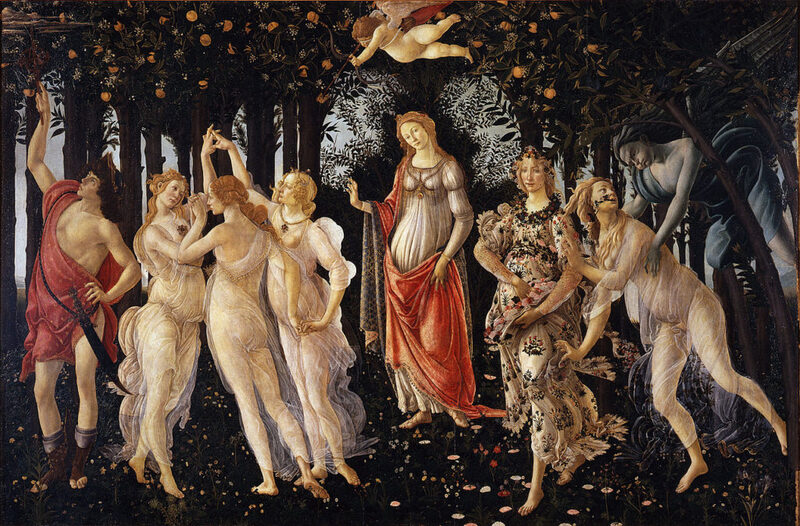
One of the most famous works that encapsulate the theme of transformation embedded in the narratives in Ovid’s Metamorphoses is Botticelli's Primavera. The painting depicts nine mythological figures most notably the nymph Chloris who is portrayed before and after her transformation into the spring goddess Flora [4].
Bernini's Captivation
His work has captivated artists for centuries and Gian Lorenzo Bernini is no exception. Bernini was surrounded by a humanistic environment that admired the work of Ovid. The intellectual climate of Rome, at the time, fostered creative interpretations of ancient literature that Bernini passionately took a part in [5]. Bernini was captivated by Ovidian themes. It is thought that he encountered Ovidian texts when he was just a young boy.
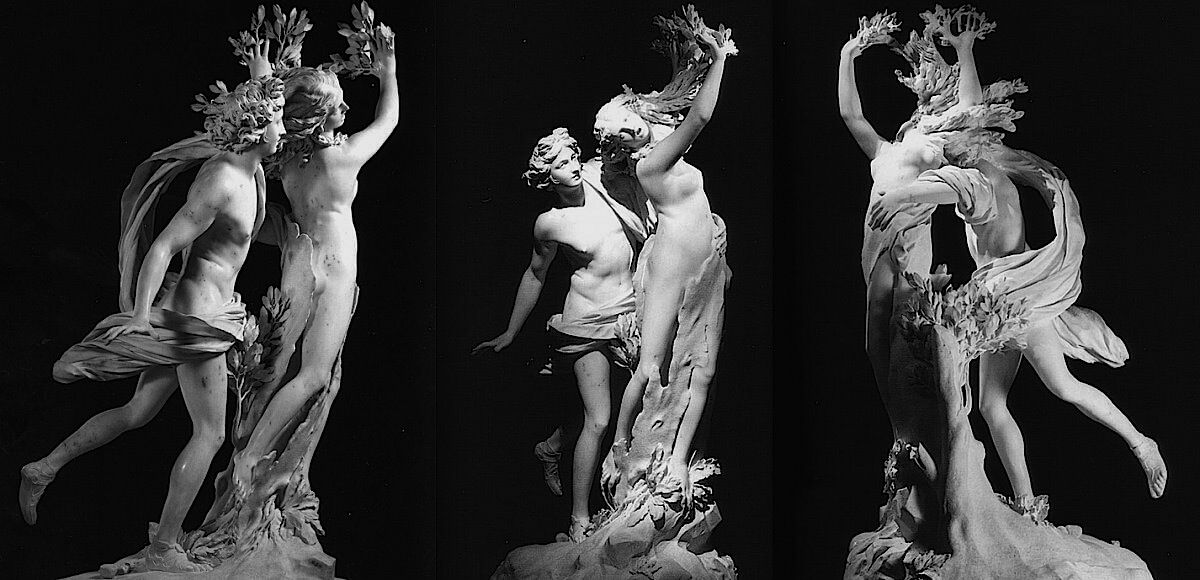
Bernini turned Ovid's work into stone. He represented the themes of metamorphosis through the transformation of stone, which some scholars have regarded as “multiple metamorphoses'" [6].
In this section of the exhibition, you will explore five sculptures by Bernini that are heavily inspired by Ovid’s Metamorphoses. These include Medusa, Neptune and Triton and a collection of works commissioned by Cardinal Scipione Borghese including Apollo and Daphne, Rape of Proserpina and Aeneas, Anchises and Ascanius.
References
- Barolsky, Paul. Ovid and the Metamorphoses of Modern Art from Botticelli to Picasso. New Haven, Connecticut: Yale University Press (2014), 9.
- Barolsky, Ovid and the Metamorphoses of Modern Art from Botticelli to Picasso, 10.
- Barolsky, Ovid and the Metamorphoses of Modern Art from Botticelli to Picasso, 16.
- “Spring by Botticelli: Artworks: Uffizi Galleries.” by Botticelli | Artworks | Uffizi Galleries. The Uffizi. Accessed December 7, 2021.
- Wilkins, Ann Thomas. “Bernini and Ovid: Expanding the Concept of Metamorphosis.” International Journal of the Classical Tradition 6, no. 3 (2000), 386.
- Wilkins, “Bernini and Ovid: Expanding the Concept of Metamorphosis,” 386.