Aeneas, Anchises, and Ascanius
Background
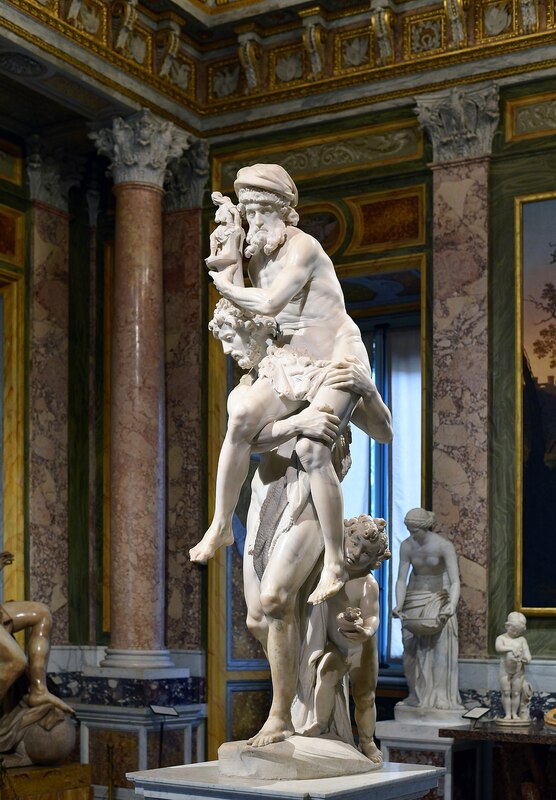
The Aeneas, Anchises, and Ascanius sculpture was the first large modern sculpture to be exhibited at Borghese villa [1]. Furthermore, the sculpture is also one of Bernini’s earliest large commissions. He completed the sculpture when he was just twenty years old. Pietro Bernini most likely played a role in his son’s creation of the piece [2].
The sculpture depicts a classic visual from the stories of the Trojan War. It shows Aeneas, the founder of Rome, leading his family from the burning city of Troy. Aeneas carries his father Anchises on his back and his young son Ascanius follows them from behind. The story is most notably drawn from Virgil’s “Aeneid.”
Analysis and Significance
This sculpture represents the passage of time and family. The life-sized group illustrates the three generations of the Aeneas family with the elder, the father, and the son [3]. On a grander scale, this sculpture represents the three ages of man itself. Arguably, this representation of the ages of man incorporates significant Ovidian themes. It depicts the transformation of man and the process of aging and maturation. It reckons with the different stages of life and the metamorphosis and maturation that come along with it.
Not to mention, the patronage of Cardinal Scipione Borghese also adds to the symbolism of the piece. We witness the figures of Anchises and Aeneas– the union of youth and old, working together in this historic event [4]. This could possibly symbolize the union of Pope V and his nephew Scipione Borghese. Both works alongside each other in their political roles and Borghese had served as an aid to his elderly uncles for years before this piece was completed. This could explain Borghese’s gravitation toward the piece and further underscores the personal and emotional undertones behind the piece.
The most significant symbolism found within the piece, however, is its embedded Christian themes. First, as mentioned previously, these three main figures could represent the Christian trinity and the different ages of God: the father, the son, and the holy spirit.
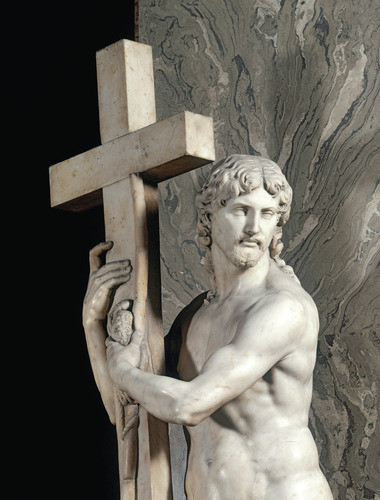
Furthermore, Bernini drew from Michelangelo’s Christ in Santa Maria Sopra Minerva when constructing the faces of Aeneas [5]. This imitation symbolizes the relationship between father and son and links it to that of a patrilineal trio [6]. Just as Christ is seen holding on steadily to the cross as seen in Michalengo’s work, Aeneas holds on to his father while striding forward. The religious imagery is further demonstrated through Aenas holding on to their family gods in one hand, blessing this difficult journey [7].
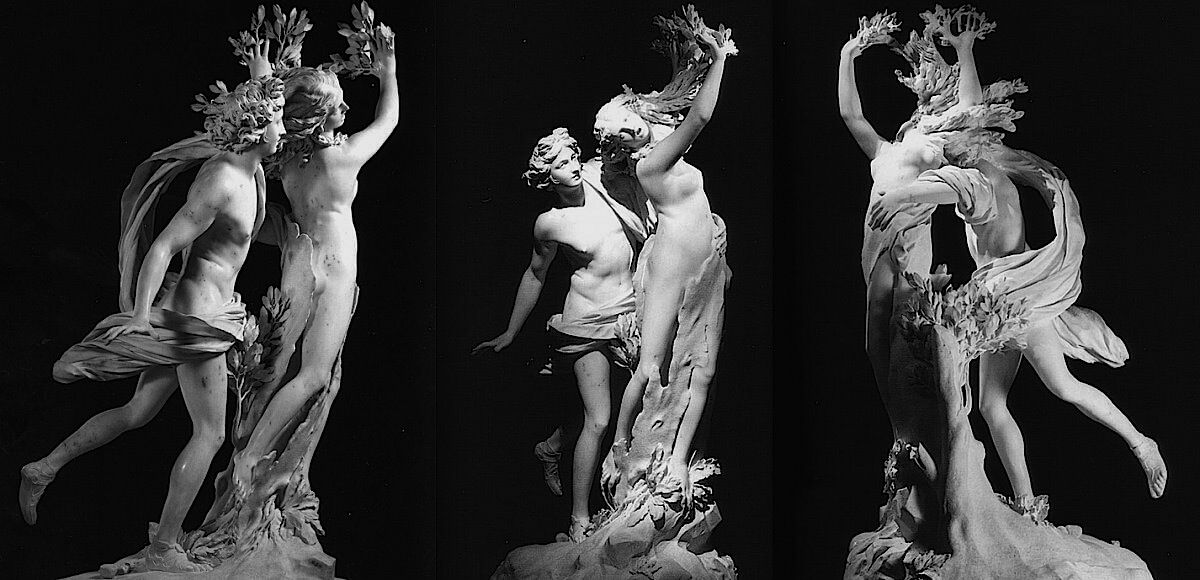
We can further witness its relationship with Catholic themes and its place within the Counter-Reformation through its location within the Borghese villa. As stated, previously Cardinal Borghese commissioned Apollo and Daphne and Rape of Prosperina and was meant to be placed alongside each other and both were accompanied by moralizing inscriptions. The David and Aeneas, Anchises, and Ascas were meant to be placed within the same group and were not accompanied by pertaining inscriptions. First, it's important to note how these two structures were paired together. A clear Christian symbol is paired with a Roman mythological tale. However, this tale carried significant Christian themes that allowed for this partnership. The depicted fleeing Troy story symbolizes the fulfillment of the Roman Empire in the Catholic Church which complements the depiction of David as a prophet of Christ and the Catholic Church [8]. The fact that both of these sculptures did not require a moralizing inscription reveals that these historical stories did not need to be mortalized as compared to the pure Greek mythological stories of Apollo and Daphne and Rape of Proserpina.
Finally, it’s important to emphasize that this work, like many other works commissioned by Cardinal Borghese, is meant to appeal to his intellectual prowess and dedication to the classics. However, this sculpture in particular appeals to the human condition and easily elicits sympathy due to its personal subject matter pertaining to parenthood and family. Many scholars argue that Bernini himself alongside Cardinal Borghese related to this specific theme. Not only through relating this theme of parenthood between his father Pietro Bernini but also through the symbolic “parenthood” between Michelangelo and Bernini [9]. Through this piece, Bernini pays homage to Michelangelo’s influence in his own work. Bernini constructs himself as Michelangelo's son and his artistic heir of sorts.
References
1. Bacchi, Andrea, and Anna Coliva. Bernini. Milano: Officina Libraria srl. (2017), 154.
2. Bacchi, Andrea, and Anna Coliva. Bernini, 154.
3. Bacchi, Andrea, and Anna Coliva. Bernini, 158.
4.“Aeneas, Anchises, and Ascanius by Bernini in Borghese Gallery.” Galerie Borghèse. Borghese Gallery, August 2, 2019. https://borghese.gallery/collection/sculpture/aeneas-anchises-and-ascanius.html.
5. Bacchi, Andrea, and Anna Coliva. Bernini, 154.
6. Mangone, Carolina. "Like Father, Like Son: Bernini's Filial Imitation of Michelangelo." Art History 37, no. 4 (2014): 666-687, 673.
7. Mangone, "Like Father, Like Son: Bernini's Filial Imitation of Michelangelo," 673.
8. Bacchi, Andrea, and Anna Coliva. Bernini, 146.
9. Mangone, "Like Father, Like Son: Bernini's Filial Imitation of Michelangelo," 667.